
Mastering the skill of how to write effective prompts for Midjourney v7 is the critical differentiator between generating generic images and creating stunning, intentional AI artwork. Midjourney’s latest version responds with remarkable sophistication, but it requires equally sophisticated instruction. This definitive guide provides a actionable framework, breaking down the precise methodology for how to write effective prompts for Midjourney v7 that consistently produce high-quality, tailored results.
Table of Contents
The Core Philosophy of Prompt Engineering in v7
Midjourney v7 is not just an upgrade; it’s a shift towards greater interpretative intelligence. The model now has a deeper understanding of context, material properties, and artistic nuance. Therefore, learning how to write effective prompts for Midjourney v7 means moving beyond basic description into structured communication. Your prompt acts as a creative brief, and specificity is your most powerful tool. V7 rewards clarity and punishes vagueness, making a strategic approach to how to write effective prompts for Midjourney v7 essential for professional outcomes.
The 6-Part Structural Formula for v7 Prompts
The systematic answer to how to write effective prompts for Midjourney v7 lies in a repeatable formula. This structure ensures no critical component is missed.
1. Foundational Subject (The “Who” or “What”)
Begin with unambiguous specificity. Avoid broad categories.
- Ineffective:
a castle - Effective for v7:
a crumbling gothic castle built from black basalt
2. Dynamic Action and Environmental Context (The “Doing” and “Where”)
Immediately place your subject within an active scene. This grounds the image.
- Example:
...perched precariously on a jagged volcanic cliffside, with a spectral aurora swirling in the turbulent sky above
3. Definitive Artistic Style and Medium (The “How it Looks”)
This is where you define the visual genre. V7 has an extensive understanding of styles.
- Examples:
etched in the style of a Victorian steel engraving,unreal engine 5 render, octane render,torn paper collage on a textured canvas background
4. Cinematic Lighting and Emotional Atmosphere (The “Mood”)
Lighting is the primary driver of emotion. Direct it deliberately when crafting how to write effective prompts for Midjourney v7.
- Examples:
crisp volumetric moonlight casting long, dramatic shadows,hazy golden hour light with lens flare,dark, moody ambiance with a single highlight source
5. Technical Composition and Perspective (The “Camera Work”)
Use film and photography terminology to control framing.
- Examples:
low-angle wide shot showcasing scale,macro focus on intricate details,symmetrical composition, drone's eye view
6. Essential v7 Parameters (The “Technical Settings”)
Parameters fine-tune the generation. Key for how to write effective prompts for Midjourney v7:
--ar 7:4(or other ratios): V7 introduces new native aspect ratios.--style raw: Crucial for v7, this reduces Midjourney’s default stylistic flair for more prompt-literal outputs.--stylize <value>: The optimal--svalue range may differ in v7; test between 50 and 500.--chaos <c>: Higher values (30-80) increase compositional surprise in initial grids.--weird <w>: A unique v7 parameter for exploring unconventional aesthetics (try 500-2000).
Advanced Techniques: Moving Beyond the Basics
Once you grasp the foundational structure of how to write effective prompts for Midjourney v7, these advanced techniques unlock finer control.
A. Precise Weighting with ::
Assign numerical weights to prioritize concepts. A higher number increases emphasis.
- Prompt Example:
A cyberpunk samurai::1.8 meditating in a neon-drenched alley::1.2, rain-slicked streets::1, background signs in Japanese::0.8 --style raw
B. Negative Prompting with --no
Proactively exclude unwanted elements, a vital part of how to write effective prompts for Midjourney v7.
- Example:
--no blurry, deformed hands, text, watermark, cartoon
C. Remix Mode for Directed Evolution
Activate /prefer remix in settings. This allows you to alter the prompt when creating variations (V1, V2, etc.), enabling iterative refinement—a core strategy for how to write effective prompts for Midjourney v7 that evolve.
From Concept to Output: A Practical Walkthrough
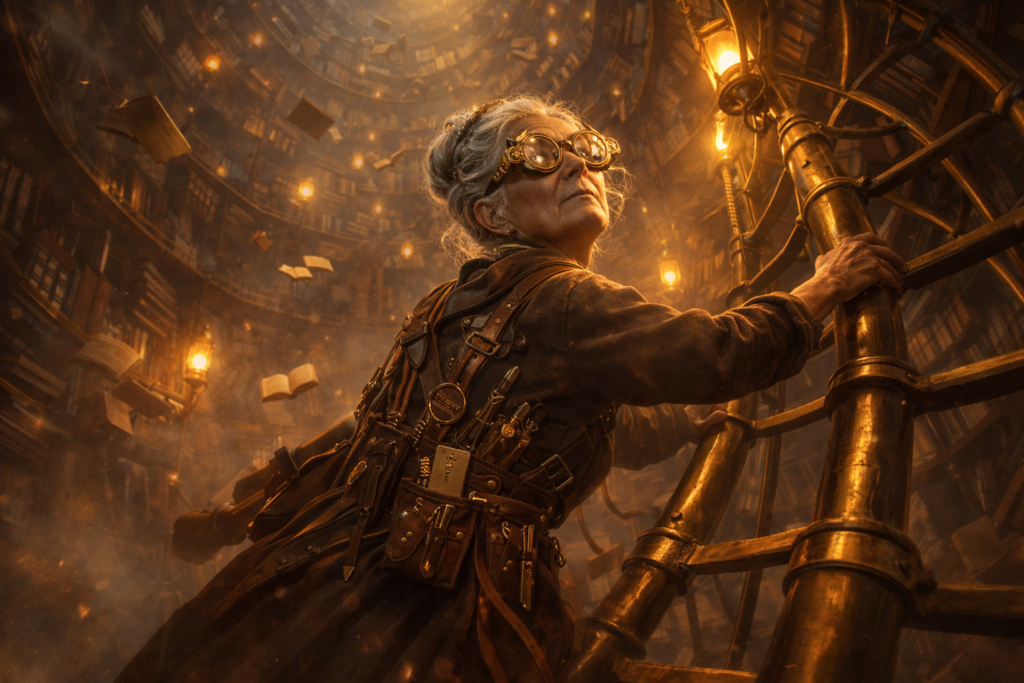
Let’s apply the complete framework. Our concept: A steampunk librarian in a vast archive.
Step 1: Subject: An elderly female librarian with intricate brass spectacles and tool-filled leather harness
Step 2: Action/Context: ...ascending a spiraling brass ladder within a cavernous library of floating books
Step 3: Style/Medium: steampunk aesthetic, detailed concept art, trending on ArtStation
Step 4: Lighting/Atmosphere: warm gas lamp glow cutting through dusty, atmospheric haze
Step 5: Composition: dynamic low-angle shot, depth of field
Step 6: Parameters: --ar 4:3 --style raw --s 150 --c 20
Final Integrated Prompt:An elderly female librarian with intricate brass spectacles and a tool-filled leather harness ascending a spiraling brass ladder within a cavernous library of floating books, steampunk aesthetic, detailed concept art, trending on ArtStation, warm gas lamp glow cutting through dusty atmospheric haze, dynamic low-angle shot, depth of field --ar 4:3 --style raw --s 150 --c 20
Optimization and Iteration: The v7 Workflow
Understanding how to write effective prompts for Midjourney v7 is an iterative cycle.
- Start Simple: Begin with a concise core subject and style.
- Analyze Outputs: Identify what the AI misinterpreted or omitted.
- Refine with Precision: Add or reweight descriptive elements. Use
--style rawfor stricter adherence. - Leverage Variations & Remix: Use Vary (Strong/Subtle) and Remix Mode to explore nuances.
- Document Successful Formulas: Maintain a personal library of prompts that work.
Common Pitfalls to Avoid in v7
- Overloading: Too many competing ideas create confusion. Lead with one strong concept.
- Ambiguous Language: Use concrete visual terms. “Beautiful” is subjective; “iridescent, mother-of-pearl sheen” is explicit.
- Ignoring
--style raw: For prompt-literal results, this parameter is often essential in v7. - Neglecting Community Inspiration: Use the
/describecommand on compelling images to deconstruct effective phrasing.
Mastering how to write effective prompts for Midjourney v7 transforms the AI from a random generator into a reliable collaborative partner. By deploying the structured formula and advanced techniques outlined above, you gain precise creative control. The process of learning how to write effective prompts for Midjourney v7 is continuous, but each engineered prompt builds your skill, ultimately allowing you to consistently translate complex imagination into breathtaking visual reality.